
After 70 editions, the Belgian Cup can still surprise us. For the first time in its history, two Brussels clubs will face each other in the final. The clash between RSC Anderlecht and Union Saint-Gilloise is also remarkable for another reason: although both clubs dominated large parts of Belgian football history, they each did so in different eras. Historically, RSCA and Union rarely crossed paths in battles for league titles or cups. Until a few years ago, there was barely any real rivalry between them.
— Written by Kurt Deswert
Kurt Deswert is a Brussels-based author and football historian with a special passion for the history of Belgian and Brussels football. Ahead of the very first Brussels Cup Final between RSC Anderlecht and Union Saint-Gilloise, he wrote this longread on the rich history of football in Brussels, in which both clubs played a leading role.
The origins
RSC Anderlecht and Royale Union Saint-Gilloise are undoubtedly the most successful exponents of a story that began in the 1860s. That was when football arrived in Brussels, in the wake of the British military presence after the Battle of Waterloo and the many industrialists and engineers who helped shape the Belgian Industrial Revolution.
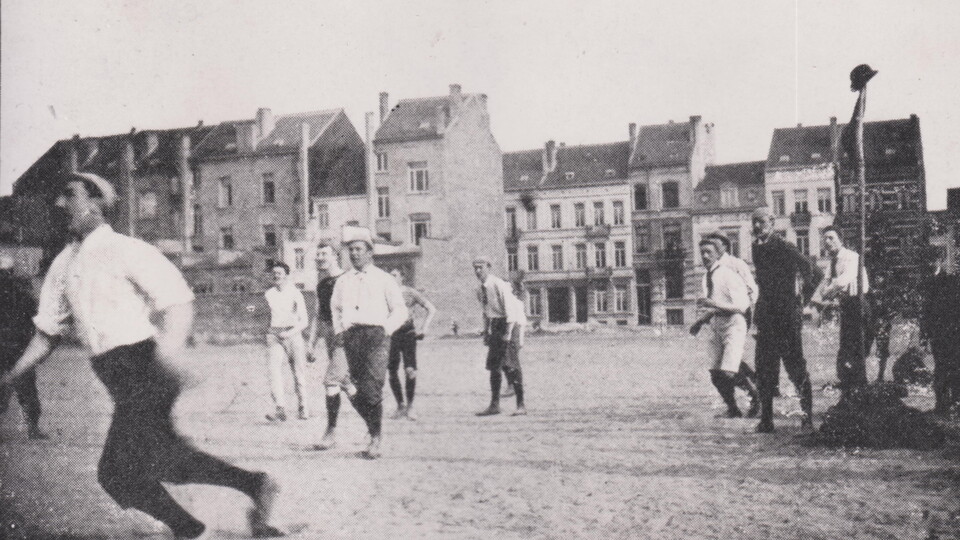
According to Rodolphe Seeldrayers (1876–1955), himself a Brussels native and later president of FIFA, football was already being played in the Belgian capital as early as 1865. Matches between pupils from English schools took place on a large vacant field in Ixelles known as Tenbosch. The sport quickly became very popular. In 1868, a certain Joseph Perry advertised in Brussels newspapers that his “English and American Store”, located on the Hofberg (today’s Mont des Arts/Kunstberg), sold footballs for young and older sports enthusiasts alike.
From the 1880s onwards, a vibrant network of football clubs emerged in Brussels, usually as part of multi-sport clubs that often also included athletics sections. Brussels Football Club, founded in 1882, is probably the oldest example. By then, the Brussels ketjes had fully embraced the game of their British neighbours. Among them were Seeldrayers and his brother.
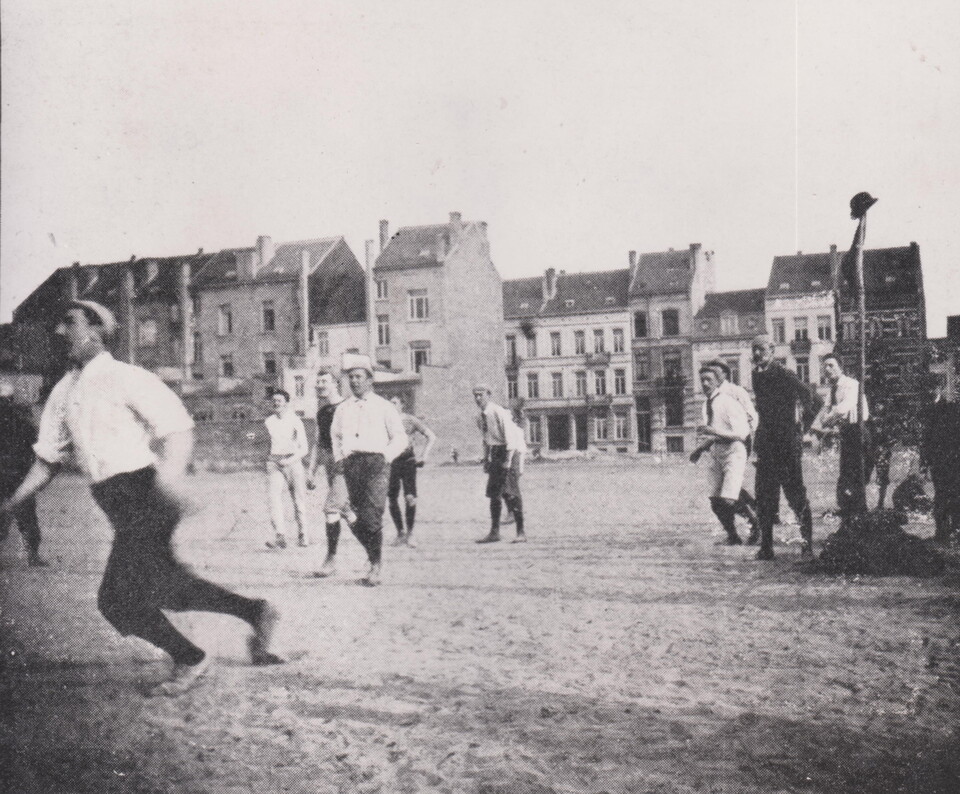
Football at Tenbosch (Source: Aftrap in Brussel)
The Plateau
By the end of the 19th century, football was not only being played at Tenbosch, but also on the other side of Brussels, on the Plateau of Koekelberg, another large vacant area. It was there that two historic clubs, Racing Club de Bruxelles (1894) and Daring (1895) - predecessors of RWDM - were founded in quick succession. They soon had to relocate because of the construction of Elisabeth Park. Shortly afterwards, work also began on the basilica. In the shadow of that construction site - which would ultimately last no fewer than 65 years - hundreds of Brussels ketjes started playing football in the streets. Among them was Raymond Goethals (1921-2004), who would later become a goalkeeper for both Daring and Racing.
Racing moved to the Ganzenvijver area in Uccle. Daring headed towards Jette and played on a pitch located on the Jetselaan, at number 501. In 1912, the very first Belgian club cup final was played there and won by Racing, thanks to a decisive goal by the Briton Cyril Bunyan (1892-1975). That goal also had a Mauve connection, as Bunyan would become Anderlecht’s first foreign coach ten years later. According to legend, he replaced his father Maurice, who had just signed a contract with the club but died only ten days later.
Racing was the first major Brussels club, the first Brussels club to become Belgian champions, and also the first cup winner. The club won six league titles before the First World War and also played an important role in the creation of FIFA - though that is another story. Despite its success and its magnificent stadium in Uccle, with the 1902 grandstand that still exists today (a must-see for groundhoppers), Racing eventually lost its dominance over Belgian football to Union.
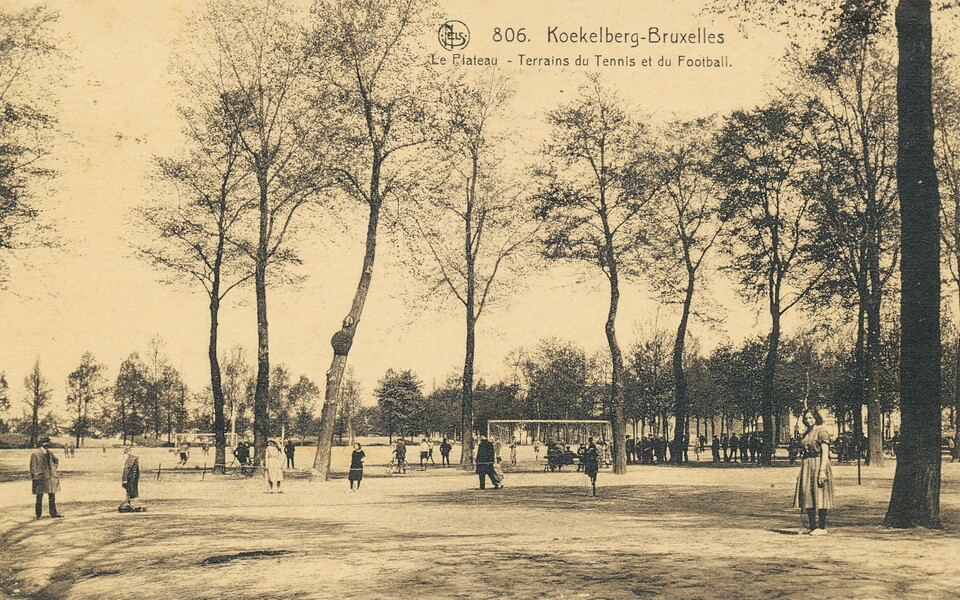
Le Plateau de Koekelberg (Source: Nico Dewaele, RWDM 50 Years)
Union as a topclub
Royale Union Saint-Gilloise was founded in 1897 on the Van Meenenplein in Saint-Gilles. But the small group of adolescents, of which the oldest was only 19 years old, was soon driven away to make room for the construction of the imposing new Saint-Gilles town hall. Several relocations followed before Union eventually settled at the Duden Park. The team quickly fought its way to the top, partly thanks to its - for that era - highly physical approach. In the amateur age, when fair play and sport for sport’s sake still prevailed, Union already played with a relentless will to win. Driven by then-illegal bonuses, Union won seven league titles before the First World War. Another four followed during the interwar period. Yet above all there was the phenomenal run of 60 consecutive matches without defeat between 1933 and 1935, which remains a record to this day. That streak came to an end after a legendary derby against Daring. “Union Soixante” subsequently became a household name in Belgian and international football. Union’s success was rooted in its progressive approach. Even before the Second World War, the club already had two satellite teams to facilitate youth development. Moreover, the construction of the Joseph Marien Stadium was an architectural statement in itself.
But suddenly, the rise of the Unionists came to an end. Initially, rivals Daring took over, becoming Belgian champions in 1936 and 1937. After the Second World War, however, both Union and Daring gradually slipped away from the top of Belgian football, while RSC Anderlecht emerged as the country’s dominant football club.
The rise of the Mauves
During the interwar years, RSC Anderlecht was already steadily building its future, although it was still far from being a top club. The Mauves were founded in 1908, at a time when football was already firmly established in Brussels and Belgium. Finding a place in the football landscape was therefore no easy task, given the sporting dominance of Racing, Union and Daring. To climb the ladder, Anderlecht recruited players and coaches from neighbouring Daring, including the Versé brothers, who followed in the footsteps of their father Emile - the man who would later become the club’s first great benefactor. Daring’s star striker and Belgian international Sylva Brébart joined Anderlecht. Theo Verbeeck, who would become chairman in 1911 and remain in that position until 1951, had also first been affiliated with Daring before moving to Anderlecht. He laid the foundations for the club’s later successes, notably by investing heavily in youth development and sports medicine.
Anderlecht actually had quite a lot in common with Daring and Union. While Racing was considered somewhat more elitist, Daring, Union and Anderlecht were true people’s clubs, regularly attracting crowds of 20,000 to 30,000 spectators - especially for derby matches. Gradually, Union became more fashionable and prestigious thanks to its success and the grandeur of the Marien Stadium, an evolution that Anderlecht itself would later experience as well.
Territories
Every Brussels club had its own “territory”. Royale Union Saint-Gilloise drew its supporters from Uccle, Forest and Saint-Gilles, but it was also the club of the Marolles and of Brussels’ city centre, all the way to the canal. For a time, the club even had a secretariat in a side street off Boulevard Anspach. Union also attracted supporters from Rhode-Saint-Genèse, Halle, Beersel and the southern outskirts of Brussels. Daring, meanwhile, was the team from “the other side” of the canal, with supporters from Molenbeek, home to a large working-class population. But the club also had followers in Jette, Sint-Agatha-Berchem and the more fashionable, elevated district of Koekelberg.
RSC Anderlecht had the advantage of being based in a rapidly growing municipality, with an industrial area around the canal stretching into the Pajottenland. Anderlecht’s supporters and players came both from the heart of Cureghem, Scheut, Het Rad and the canal zone, as well as from the rural Neerpede area and neighbouring municipalities such as Lennik, Ruisbroek - where Jef Jurion came from - Drogenbos, Sint-Pieters-Leeuw, home of Paul Van Himst, and Dilbeek. When the Mauves first reached the top division in 1922, the club already counted around 719 registered members, including its athletics section. Apart from Daring, which had 1,070 members, Anderlecht was then the largest club in Brussels - even larger than Union, the city’s leading club at the time. In the whole of Belgium, only four clubs had more members. It showed that Anderlecht had been a popular club from the very beginning, with strong support throughout the municipality’s working-class neighbourhoods.
Players and directors of the Brussels clubs knew each other extremely well, notably through the Belgian national team and matches involving the “Brussels Entente”. Another striking detail was that Union, Daring and Anderlecht all once shared a very similar club emblem: two interlocking rings. The exact origin of this symbol is difficult to trace, but it first appeared as the emblem of the French Football Federation, which introduced it to Belgium through international matches involving the French national team. The fact that the three Brussels clubs used similar emblems suggests that they did not necessarily feel the need to distinguish themselves sharply from one another visually.
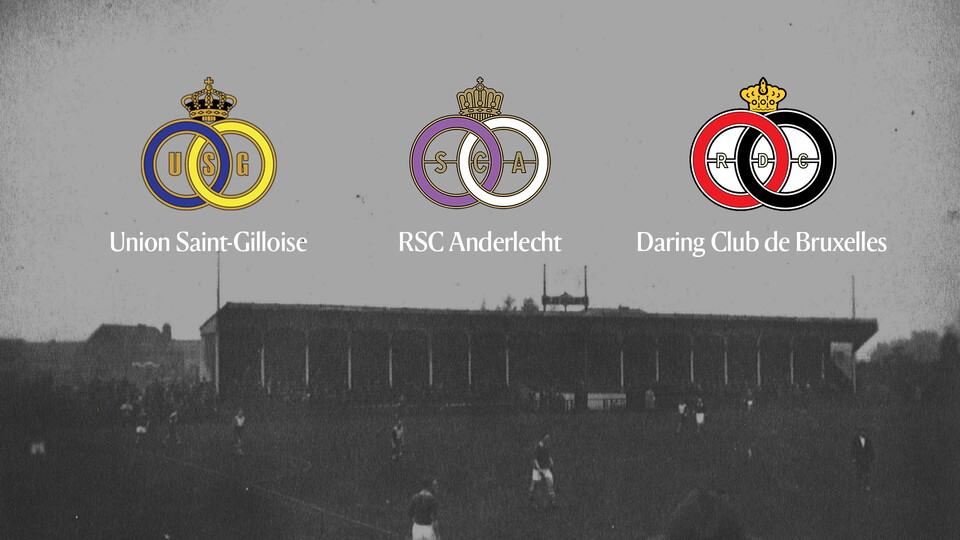
The similar logos of the three Brussels clubs (Image source: 100 jaar Royal Sporting Club Anderlecht)
Politics
The three clubs were run by bourgeois boards, reflecting the character of Brussels at the time. “C’était au temps où Bruxelles bruxellait,” sang Jacques Brel. Emile Versé was a leather manufacturer from Cureghem, while Theo Verbeeck worked as an insurance broker. Union chairman Joseph Marien, meanwhile, was a wealthy stockbroker, whereas Daring’s Emile Bossaert owned the Victoria biscuit factory and also served as the liberal mayor of Koekelberg. Union likewise maintained close ties with the liberal municipal administration of Saint-Gilles. At Anderlecht, however, board members largely came from Catholic circles. Versé was a member of Anderlecht’s Catholic association, and the club itself had been founded in the parish hall “Concordia”, linked to the Church of Saints Peter and Guido.
The Year 1935
In 1935, Royale Union Saint-Gilloise celebrated its third consecutive league title (and would then wait 90 years for the next one). In the same year, the Mauves finally established themselves in the top division. Behind the scenes, significant changes were taking place in Belgian football. In 1935, the Belgian Football Association decided to allow a form of professional football in the country. With this new status of the independent footballer, paid football became possible, but it also introduced a transfer system - one that RSC Anderlecht would later make full use of.
When Union’s legendary team of 60 unbeaten matches had passed its peak, it became clear that no real succession plan had been put in place. To rebuild the squad, the club began signing players from elsewhere. Union even turned to Anderlecht for none other than Constant Vanden Stock (1914-2008). Vanden Stock was a very useful and intelligent footballer, a right-footed left-back, but also a chronically injury-prone one. He was well settled at Union: “The public of Saint-Gilles gave me a warm welcome. The adaptation went smoothly, and I enjoyed five beautiful years at Duden Park,” he later recalled. However, in 1943 he was forced to hang up his boots.
Both Union and Anderlecht made bold moves on the transfer market, even during wartime. The results, however, differed greatly. Union signed goalkeeper Maurice Lammens from Lokeren for 100,000 Belgian francs. Anderlecht went one step further, bringing in young centre-forward Jef Mermans from Tubantia Borgerhout for 125,000 francs - a record fee, and one that would prove to be money well spent. Mermans became the transfer of the century in Belgium. He was the missing link for RSC Anderlecht, single-handedly transforming the club from a mid-table side into Belgium’s ultimate powerhouse. Meanwhile, Union goalkeeper Lammens became involved after the Second World War in a murky moral scandal from which his career never recovered. Not everything is predictable.
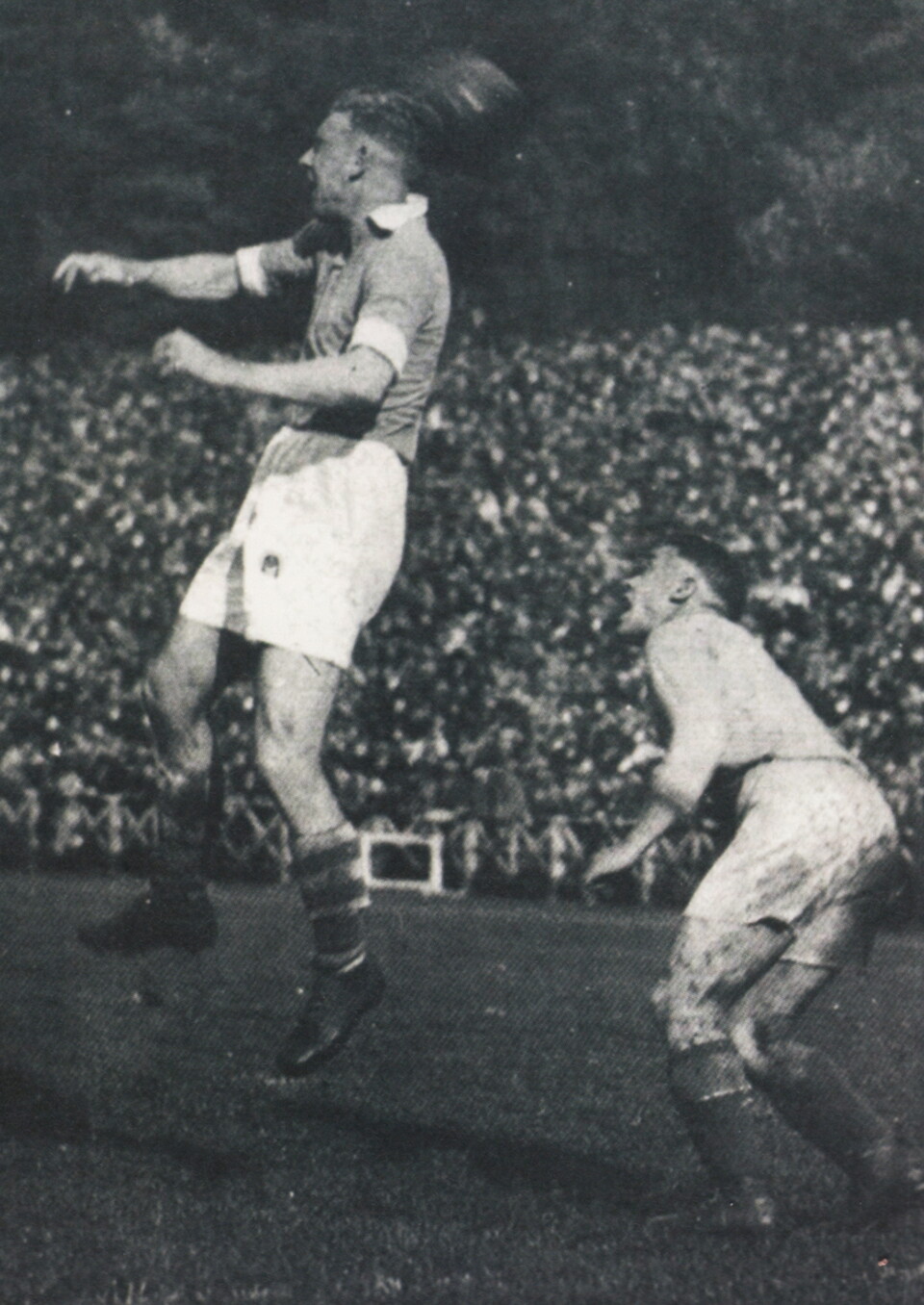
Constant Vanden Stock clears a ball with a header during RSCA - Union in 1936. (Source: 100 jaar Royal Sporting Club Anderlecht)
New pragmatism
While Mermans became the spearhead on the pitch, two ambitious young administrators ensured that RSC Anderlecht also gained an advantage off the field over Union and the rest. Under the leadership of chairman Albert Roosens and secretary-general Eugène Steppé, the foundations were laid after the Second World War for a new form of football management. Steppé and Roosens both came from the fuel industry. As a clerk at Shell, Steppé had seen what kind of corporate organisation was needed to achieve international success and growth. They applied those same principles to football. Anderlecht’s new pragmatism projected the club into the future, while was still operating in a more traditional manner. At Union, well-meaning bourgeois administrators continued to manage affairs as they had done in the 1930s, seemingly unaware that both the world and football had changed radically in the meantime. A similar attitude also led other former top clubs such as Daring and Beerschot into a gradual decline. At Union, poor results soon followed, including the first relegation in 1949, along with increasing difficulty in competing financially with Anderlecht, FC Liège and Standard.
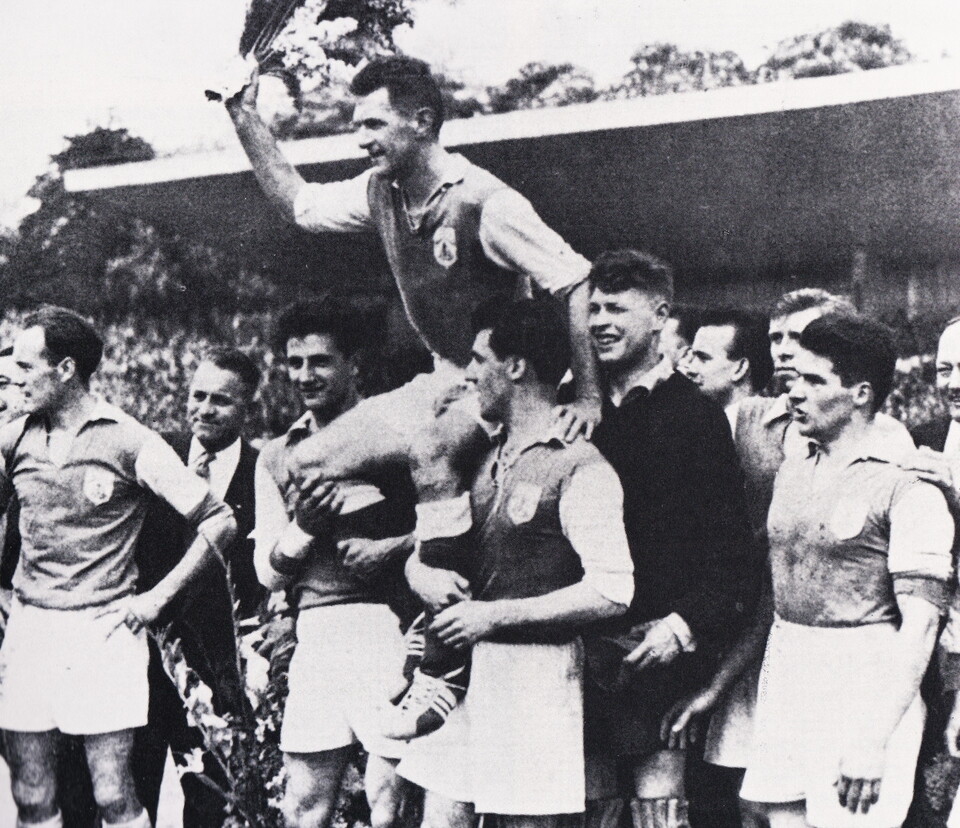
Jef Mermans, the Bombardier of the Mauves, joins from Tubantia in 1942. (Source: 100 jaar Anderlecht)
Van den Berg and Kialunda
Royale Union Saint-Gilloise gradually declined. The club experienced a brief resurgence in the late 1950s and early 1960s, built around the talent of Paul Van den Berg, also known as “the Pale Artist”. Van den Berg was one of the most elegant players ever seen on a Belgian football pitch.
The arrival of European competitions brought a touch of renewed prestige to the Duden Park, but Union would no longer manage to re-establish itself among the Belgian elite. Van den Berg eventually left for RSC Anderlecht, albeit via a spell at Standard. At the Astrid Park, he combined exceptionally well with Paul Van Himst, with whom he had already shared the pitch for the Belgian national team. The imposing Congolese defender Julien Kialunda also made the move from the Duden Park to the Astrid Park, where he became a club legend. For Union, the momentum was definitively lost. After the Second World War, the club would never finish higher than fourth place again - until its recent revival. For the Mauves, the main rivals became Standard Liège, and later Club Brugge.
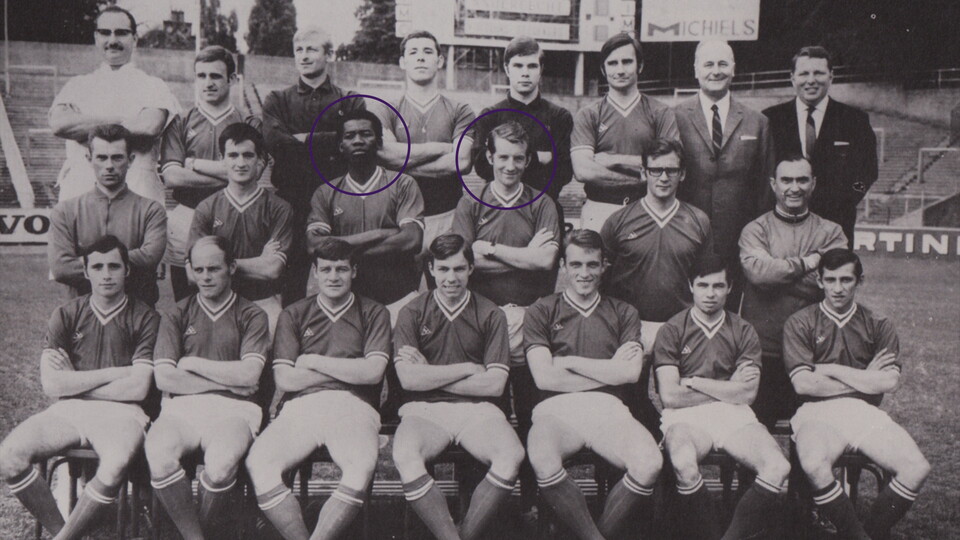
Paul Van den Berg and Julien Kialunda in 1967-68. Of the 16 players in this team photo, six later played or coached at Union: Heylens, Trappeniers, Plaskie, Kialunda, Van den Berg and Teugels. (Source: RSC Anderlecht 1908 - 1983)
L’ère des millionnaires
Union could no longer reverse the tide and was relegated from the top division in 1973. The club immediately dropped further down to the third division. This happened under the leadership of former RSC Anderlecht players Georges Heylens, who began his coaching career at Duden Park, and his assistant Jean Plaskie. To stem the sporting decline, Union turned in 1975-76 to its big brother Anderlecht, which was then busy establishing itself among Europe’s elite. The club reached out to Constant Vanden Stock - who still had a soft spot for Union - and no fewer than six RSCA players were brought to the Duden Park: Eddy De Bolle, Leen Barth, André Denul, Stanley Leghait, William Stallaert, and especially Jan Verheyen. The latter, even as a third-division player, continued to feature for the Belgian national team. The “millionaire team” at the Duden Park initially performed quite well. In the cup, they even faced . A goal by Robbie Rensenbrink in the 95th minute was needed to send the Mauves through after a fiercely contested match. Michel Lomme, right-back in the European Cup Winners’ Cup final victory against West Ham, would also move to Union a year later.
But something was clearly rotten at the Stade Marien. It soon emerged that there were many unpaid bills linked to the massive investments in the squad and the renovation of the stadium. Union had clearly been living beyond its means and was unable to pay its creditors, including RSCA. The Mauves generously agreed to a payment delay to give Union some financial breathing space until certain players could be sold. However, the hole in Union’s finances proved impossible to plug. The hard-core supporter groups of both RSCA and RWDM showed their Brussels solidarity under these circumstances. They turned out en masse at the Duden Park for a match against Ostend to support Union. The gate receipts could not prevent the club’s eventual bankruptcy, but they did help ensure that Union was not completely erased from the federation’s records. Thanks to the solidarity of many Brussels supporters and a few legal “tricks”, Union was ultimately able to make a difficult restart. From then on, however, it carried a heavy financial burden and was forced to sell its best players every year.
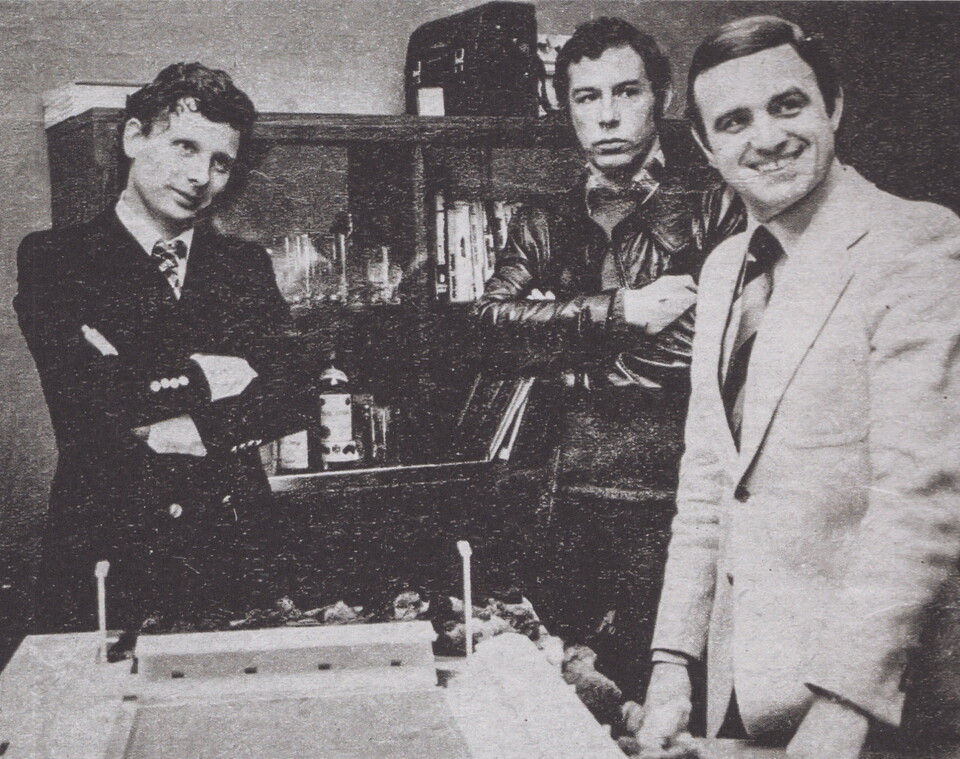
Georges Heylens en Jean Plaskie at work at Union. (Source: Royale Union Saint-Gilloise 120 jaar)
Gala football
In 1997, the fallen former top club Royale Union Saint-Gilloise celebrated its 100th anniversary. For the occasion, RSC Anderlecht was invited. A large number of former players from the club were honoured before kick-off, with special attention given to Constant Vanden Stock. By that time, Union had regained a certain sporting stability in the third division. This was largely thanks to several familiar names for Anderlecht supporters, such as Jean Thissen, Daniel De Temmerman and Daniel Renders, who took on coaching roles at the Duden Park. René Peeters also played there and would later become one of the key figures at Neerpede for many years. Up front, José Barosso entertained the fans for several seasons. He had come through the reserves of RSCA and was the younger brother of Luis Oliveira. In 1997, another figure with strong Mauve family ties also played a central role at Union. Manager Serge Trimpont was the grandson of the legendary Eugène Steppé, who had revolutionised decades earlier.
4,500 spectators saw RSCA, with Goor, Scifo, Zetterberg and a very young Alin Stoica, win the gala match convincingly 0-6. At Union, several former Anderlecht players made their appearance, including Alain Van Lint and Olivier Fieuw. At its centenary, Union seemed destined for a quiet but rather modest sporting existence, oscillating between the third, second and fourth divisions. It was also during that period that a young Vincent Kompany occasionally visited the Marien Stadium with his family on Sundays, watching the faded glory of that beautiful but increasingly deserted ground. Many other Anderlecht supporters did the same at the time. It clearly left a lasting impression on Kompany. In the build-up to a Champions League match with Bayern against Union, he stated that, as a Brussels native, he felt “significantly more sympathy” for Union than for clubs like Standard Liège or Club Brugge.
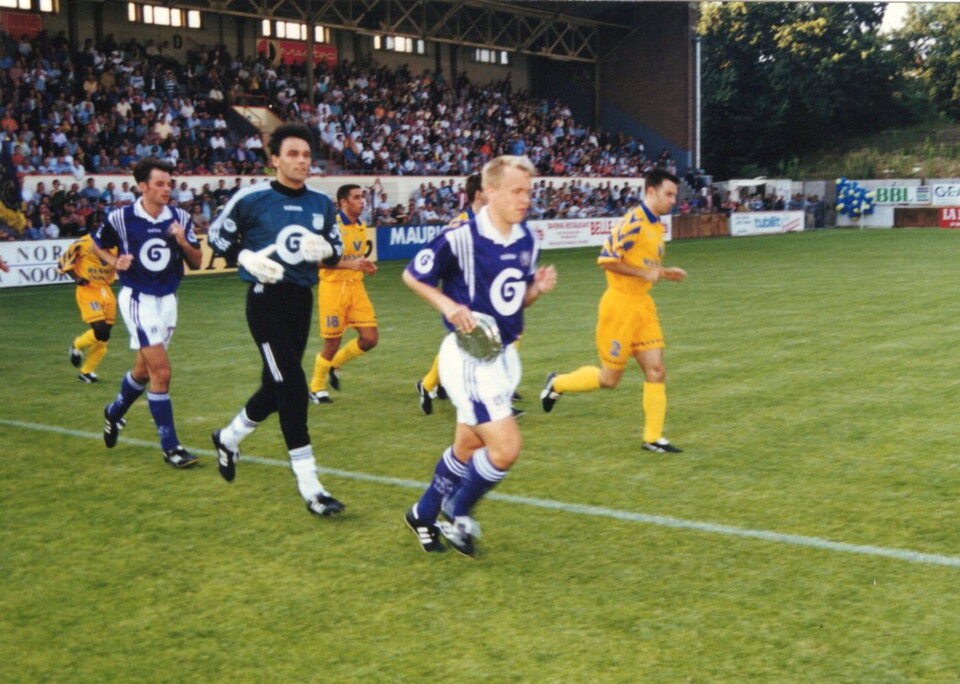
Gala match Union - RSCA celebrating the 100th anniversary of the Unionists, featuring among others Zetterberg, Milosevic and Goor. (Source: Yves Van Ackeleyen, RSCA 100 jaar)
But rivalry changes everything
It was only with Union’s resurgence in the 2020s that RSC Anderlecht and Royale Union Saint-Gilloise once again faced each other in meaningful competitive fixtures. In the cup, this led twice to defeats for RSCA - including one at home - after which the Mauves targeted South African standout Percy Tau and brought him to the Astrid Park. Against all expectations, Union returned to the top flight in 2021 after 48 years. Once there, the club exceeded all expectations. For the first time in nearly 115 years, there was once again genuine rivalry between Anderlecht and Union Saint-Gilloise. The two clubs, so deeply intertwined historically, are once more competing for league titles and cups against each other. Along the way, they also demonstrate that Brussels remains one of the most fascinating football capitals in Europe - and continues to be so.
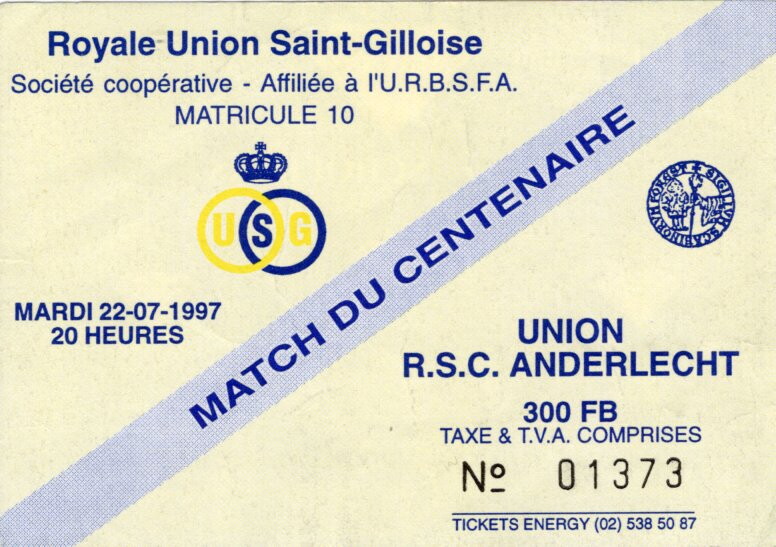
The ticket for the gala match celebrating 100 years of Union. (Source: Yves Van Ackeleyen)